A special edition nobody will notice
An Opel Vectra B 2.0 DTI – and in the special edition marking Opel’s centenary, no less. So special that on the street you can’t tell it apart from a regular Vectra B.
It was bought for 1400 zł by someone just getting into older cars. The buyer knew that at that price it would be a project car. What they didn’t know was just how much of a project it would be.
What makes the centenary Vectra special
Opel started out in 1862 making sewing machines, then moved on to bicycles, and built its first car in 1899. To mark a hundred years of car making, in 1999 it launched the Edition 100 special series – on the Corsa, Astra, Vectra and Omega.
The Vectra in this series came with a package that was impressive in 1999:
- air conditioning,
- electric front windows and electric mirrors,
- fog lights,
- a leather steering wheel with radio buttons,
- a CAR 400 cassette radio and a Triple Info Display showing the time, date and outside temperature,
- a front armrest, pockets on the backs of the front seats and lights in the doors.
How do you spot an Edition 100? By the “Edition 100” lettering on the front door mouldings, sill plates with the series logo, body-coloured door handles and 15-inch alloy wheels. That’s it.
Today almost every car has air conditioning and electric windows, so the centenary Vectra looks just like any other Vectra B. Owners on the forums admit themselves that apart from the air con there’s nothing special about it.
Under the bonnet this Vectra has the 2.0 DTI – a 16-valve direct-injection diesel with 101 hp. The same engine went into regular Vectra Bs.
A snapped glow plug
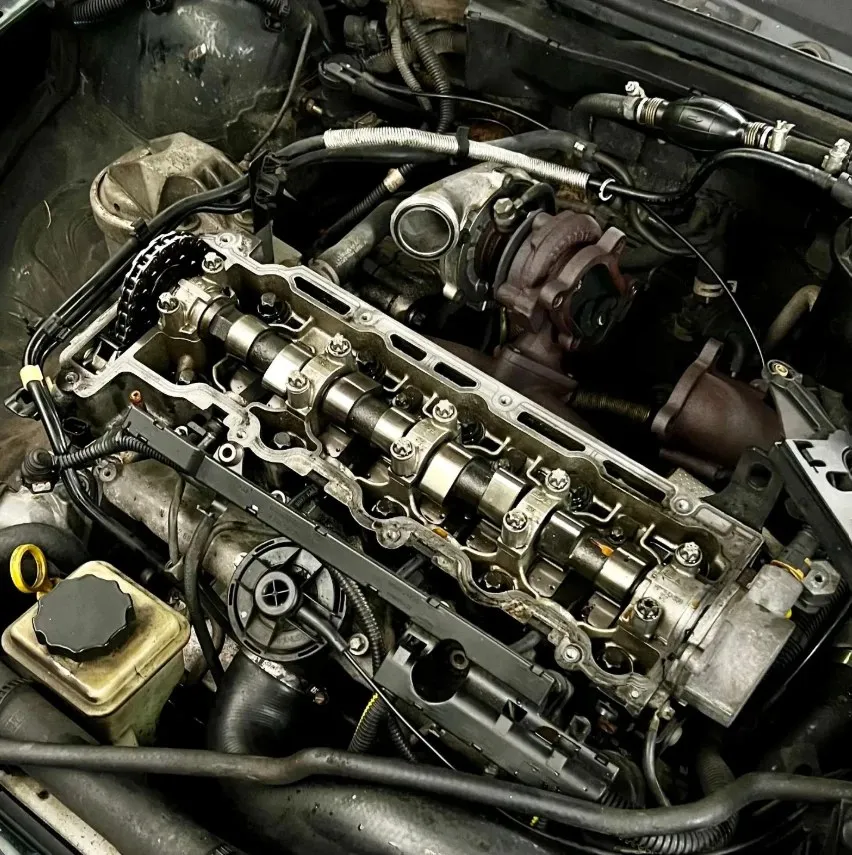
The Vectra turned out to be in worse shape than the buyer had expected, and the final nail in the coffin was a snapped glow plug.
Glow plugs heat the combustion chamber so a diesel will start from cold. They’re screwed into the cylinder head and stay there for years. Over time they seize from carbon build-up and corrosion – and a seized plug can break when you try to unscrew it. Its thread or tip then stays stuck in the head. How a glow plug differs from a spark plug, and why replacing it can be risky, is explained in our guide to glow plugs vs spark plugs.
You can’t just unscrew what’s left. It has to be carefully drilled out and extracted with special tools, making sure nothing falls into the cylinder. Sometimes this can be done without taking the head off, sometimes not. It’s a lot of work – and on an old diesel the bill quickly gets serious.
Signs of worn glow plugs
- the engine is hard to start from cold, especially in autumn and winter,
- after a cold start it runs roughly and puffs white smoke,
- the glow plug light flashes or the engine light comes on,
- the diagnostic tester shows a glow plug circuit fault.
Book a glow plug check before winterCall +48 570 585 582
A repair that costs more than the car
Removing the snapped glow plug would have cost more than this Vectra is really worth. Sadly, air conditioning and “Edition 100” on the doors don’t change that. The customer did the maths and decided the Opel would do the world more good as razor blades.
That’s exactly why you get a quote before any repair – so the decision is yours before you spend any money. Sometimes the most sensible repair is no repair at all.
How not to snap a glow plug
- don’t wait for the plugs to fail completely – the longer they stay in the head, the more they seize,
- replace them as a set, ideally before winter,
- unscrew them with the engine warm, using penetrating oil, slowly and with feel,
- if a plug won’t budge, it’s better to stop than to snap it.
The plugs aren’t everything – see what else to check in a winter diesel service.
What this case shows
1400 zł for a car isn’t much – until the first repair comes along. On an old diesel, a single seized glow plug can cost more than the whole car, and a special edition doesn’t always add to its value.
That’s why it’s worth having a cheap car looked at by a mechanic before you buy it. We can come with you to inspect it, or check the car here at the workshop. Pay particular attention to:
- the cold start – arrange with the seller that the engine isn’t warmed up before you arrive,
- reading the fault codes from the control units, including the glow plug circuit,
- the condition of the underside – rust, leaks, suspension, exhaust.